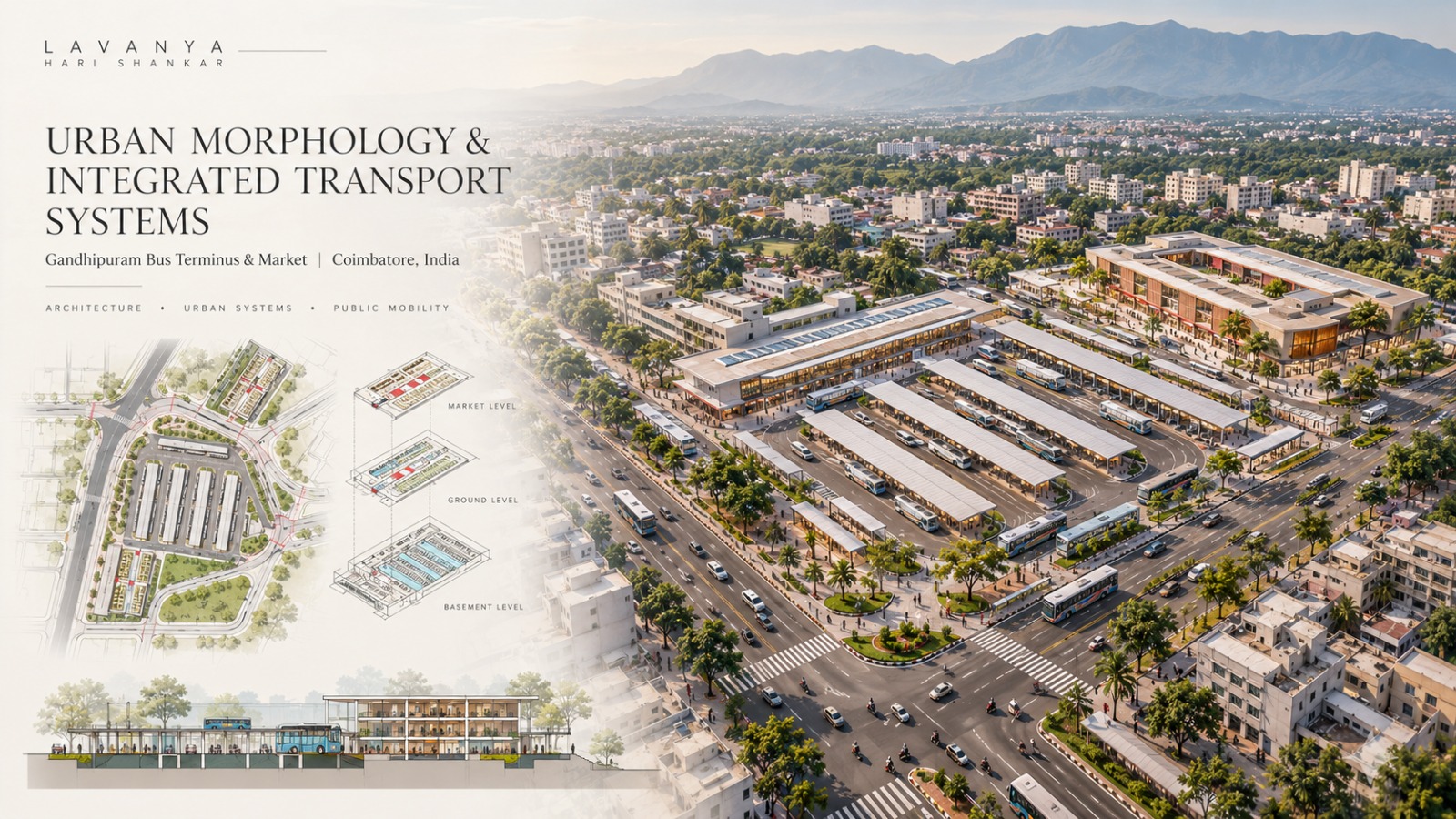
Urban Morphology & Integrated Transport Systems
Reading the City, Reimagining its Movement
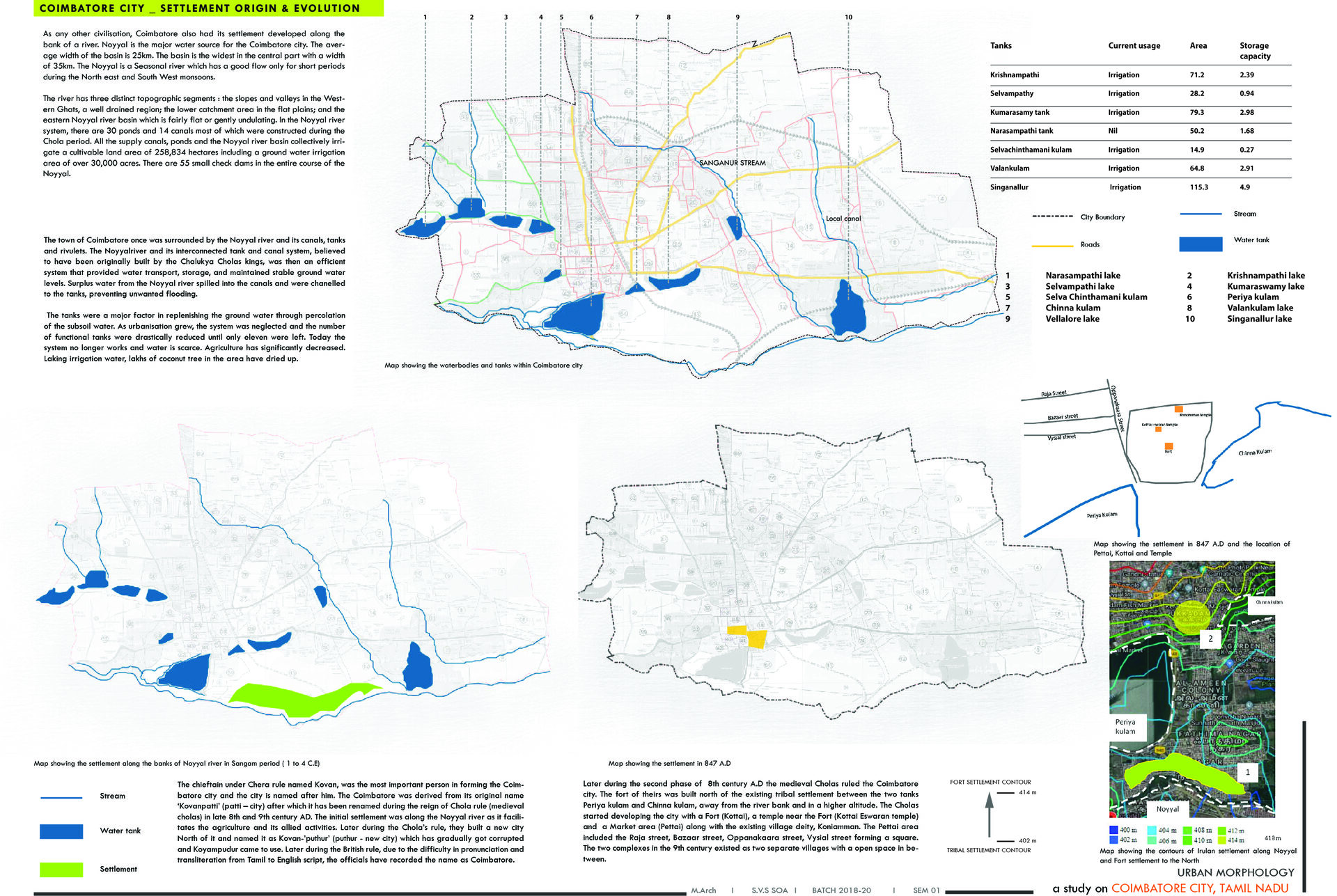
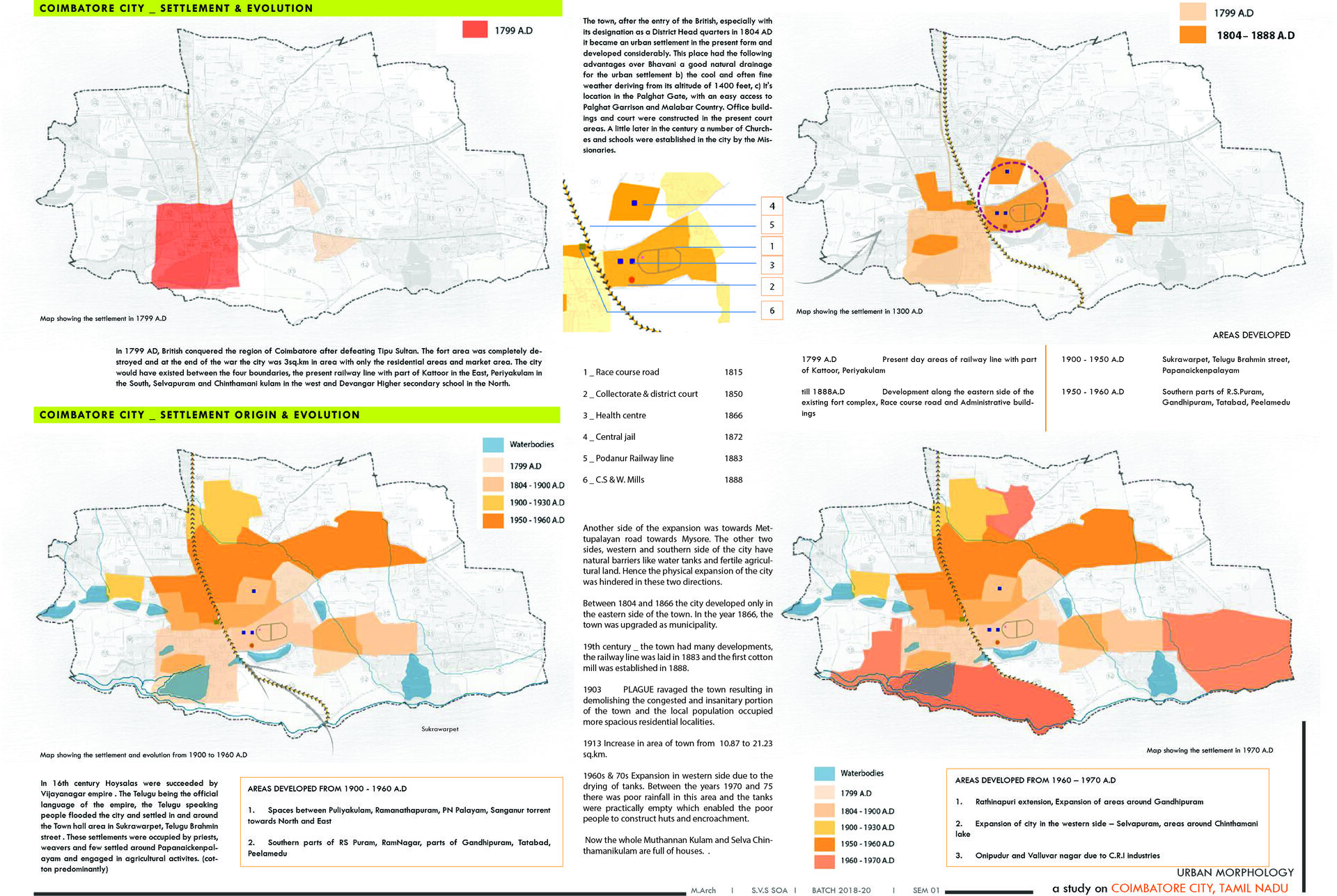
This urban-scale planning project examines the morphological evolution of Coimbatore, Tamil Nadu – one of South India's fastest-growing industrial and commercial cities. The study analyses how the city's physical form has developed over time, identifying patterns of growth, density, land use, and the relationship between built fabric and open space.
Building on this morphological analysis, the project proposes an integrated transport system designed to address the city's connectivity challenges, reduce private vehicle dependency, and create a network of accessible public spaces linked by efficient transit corridors.
Morphological Study
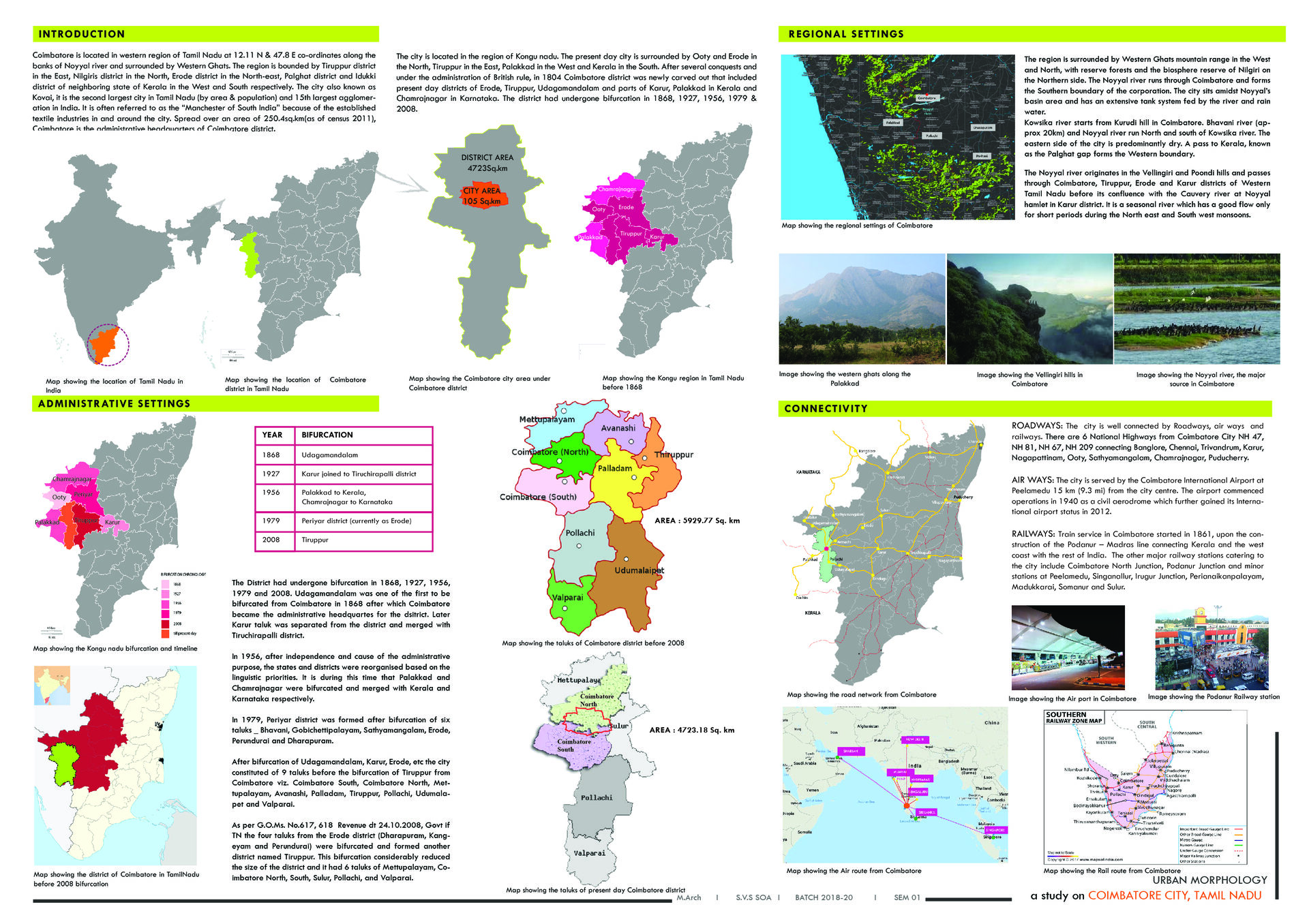
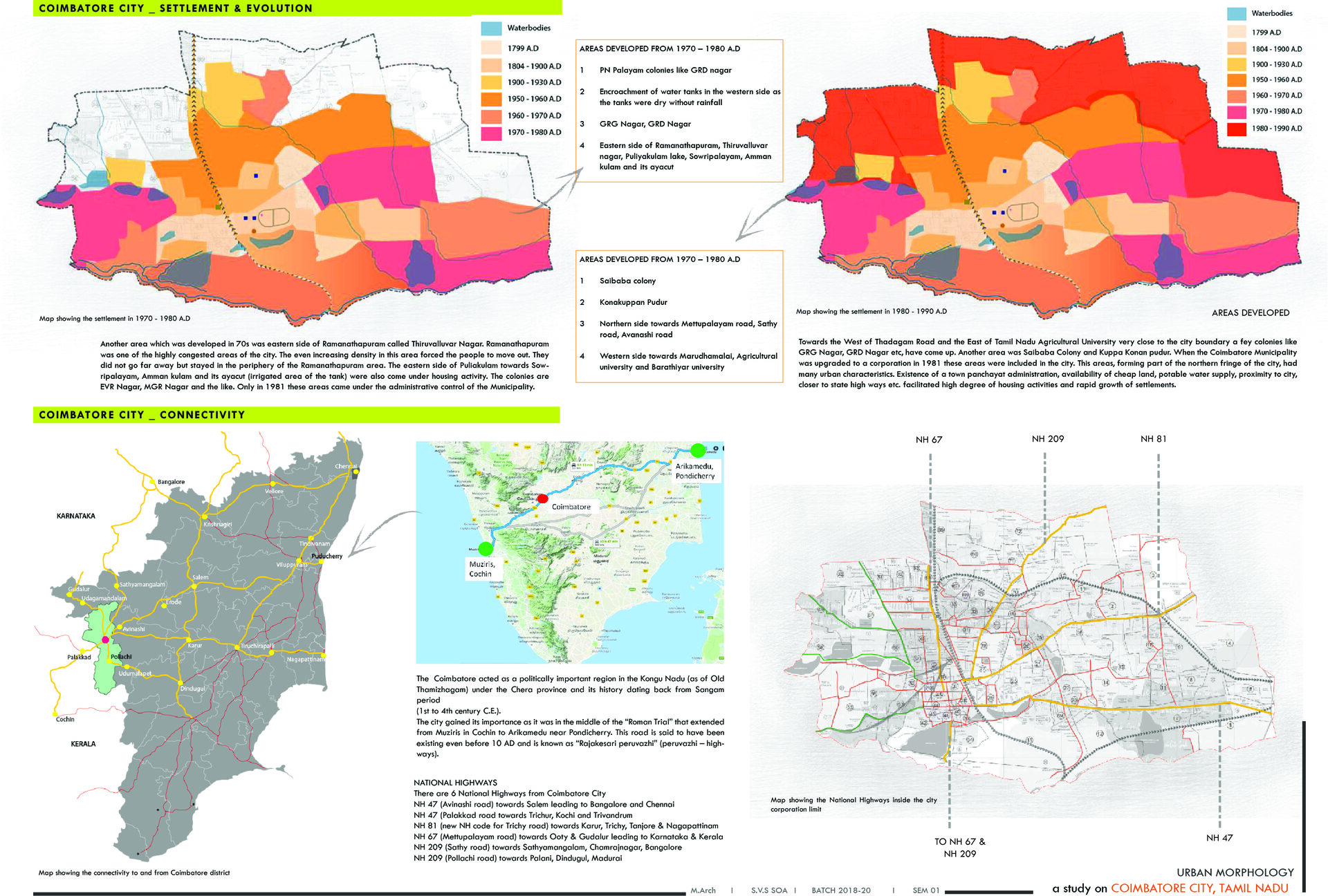
The morphological analysis maps Coimbatore's growth from its historic core outward, tracing the evolution of street patterns, block structures, land use zones, and the distribution of public and private open space.
Integrated Transport Systems
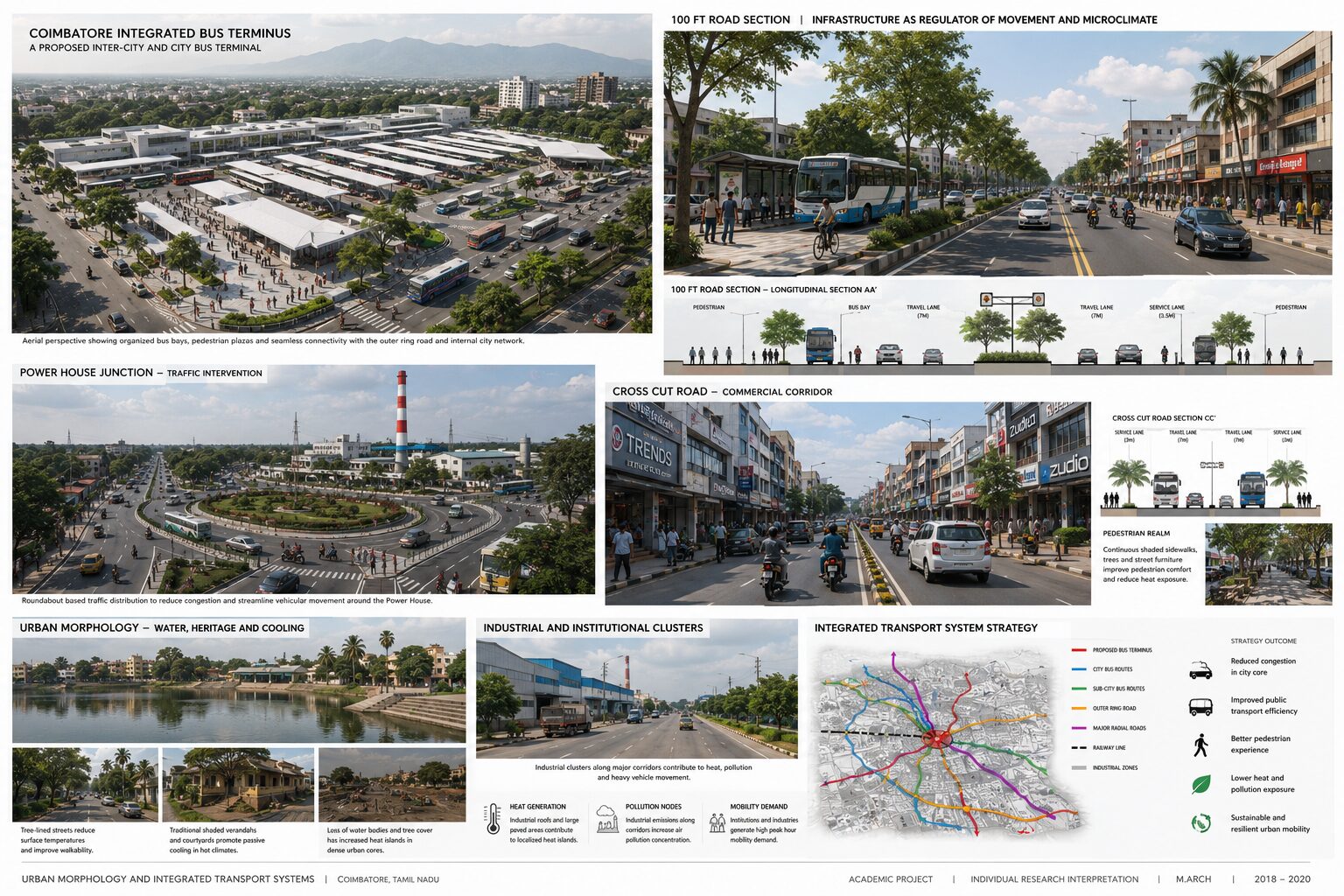
The integrated transport proposal establishes a hierarchical network of transit corridors connecting Coimbatore's major employment centres, residential zones, and public institutions. The system is designed to be multi-modal – combining bus rapid transit, cycle infrastructure, and pedestrian networks – with interchange nodes at key urban junctions.
Street sections are redesigned to prioritise pedestrians and cyclists alongside public transit, reducing the dominance of private vehicles in the city's core.
Interested in urban design work?
Get in touch to discuss urban planning, transport, or research collaborations.